Skip to content
TheFinSense
Search
Golden cross win rate compared with return, drawdown, and time in market

Golden Cross Win Rate: What Winning Trades Leave Out

Part 3: Trading Edge

A 78 percent golden cross win rate is a frequency claim, not a wealth claim. QuantifiedStrategies’ 33-signal S&P 500 backtest from 1960 through 2026 logs the 78 percent figure alongside a 40 basis point annualized drag.

Golden Cross Win Rate: What Winning Trades Leave Out Read More »
Candlestick chart with blue and orange moving-average lines crossing beside the words SMA vs EMA Crossover

SMA vs EMA Crossover: Which Should You Use?

Part 3: Trading Edge

Compare SMA and EMA crossover rules on the same SPY data. See how trading costs, EMA settings and drawdowns affect the results before choosing a rule.

SMA vs EMA Crossover: Which Should You Use? Read More »

Trendline survivorship bias showing a surviving chart line beside rejected alternatives

Trendline Survivorship Bias: Why a Line That Worked Can Mislead You

Part 3: Trading Edge

A trendline can look predictive when its anchors were chosen after the result. Learn when a line becomes usable and apply four checks before it affects a trade.

Trendline Survivorship Bias: Why a Line That Worked Can Mislead You Read More »

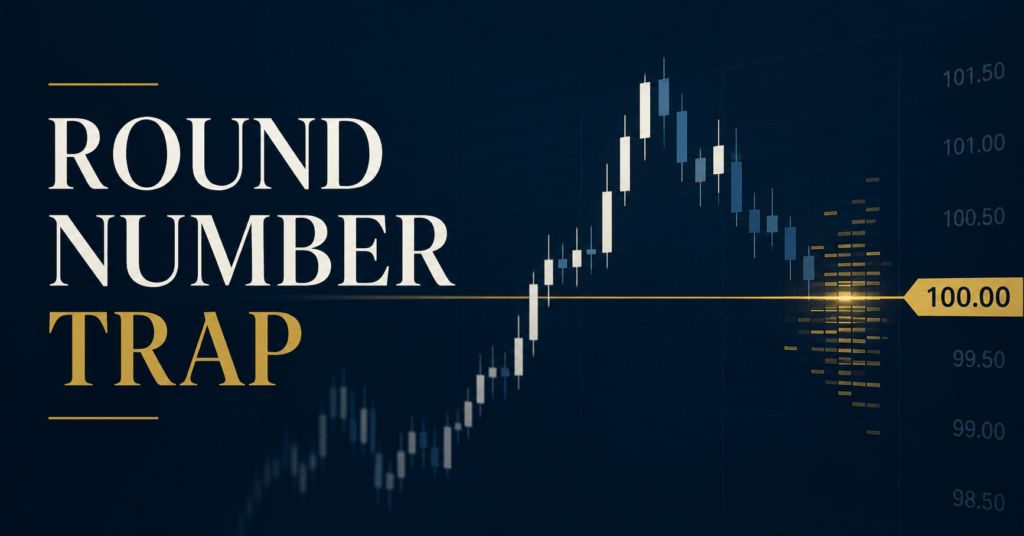
Support and resistance at round numbers shown as clustered trading activity rather than a guaranteed price reversal

Support and Resistance at Round Numbers: What the Evidence Shows

Part 3: Trading Edge

Round prices attract measurable trading attention, but the evidence does not show that they reliably hold or reverse. This guide separates clustering from prediction and gives a practical order-decision framework.

Support and Resistance at Round Numbers: What the Evidence Shows Read More »

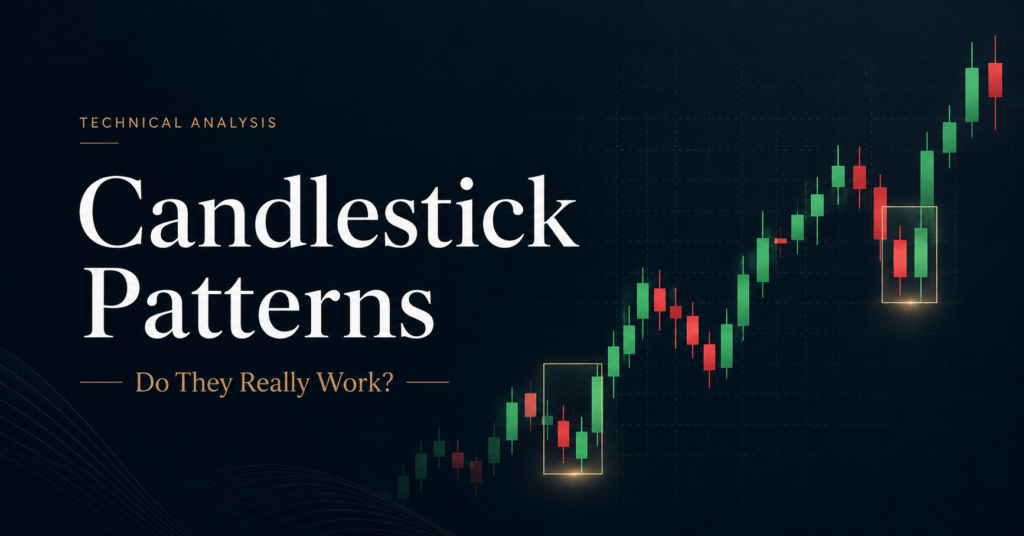
Candlestick patterns compared with cost-adjusted trading expectancy

Do Candlestick Patterns Work? What Win Rates Miss

Part 2: Stock Screening & Analysis

Candlestick patterns can mark reversals without proving a tradable edge. Separate reversal rate from trade win rate, then test payoff, costs, sample size, and out-of-sample results.

Do Candlestick Patterns Work? What Win Rates Miss Read More »

Does technical analysis work backtest audit showing search, costs, and unseen data

Does Technical Analysis Work? A Backtest Audit Before You Trade

Part 3: Trading Edge

Audit a technical trading rule before risking capital. Check its search history, realistic costs and untouched-data results with a worked backtest and worksheet.

Does Technical Analysis Work? A Backtest Audit Before You Trade Read More »

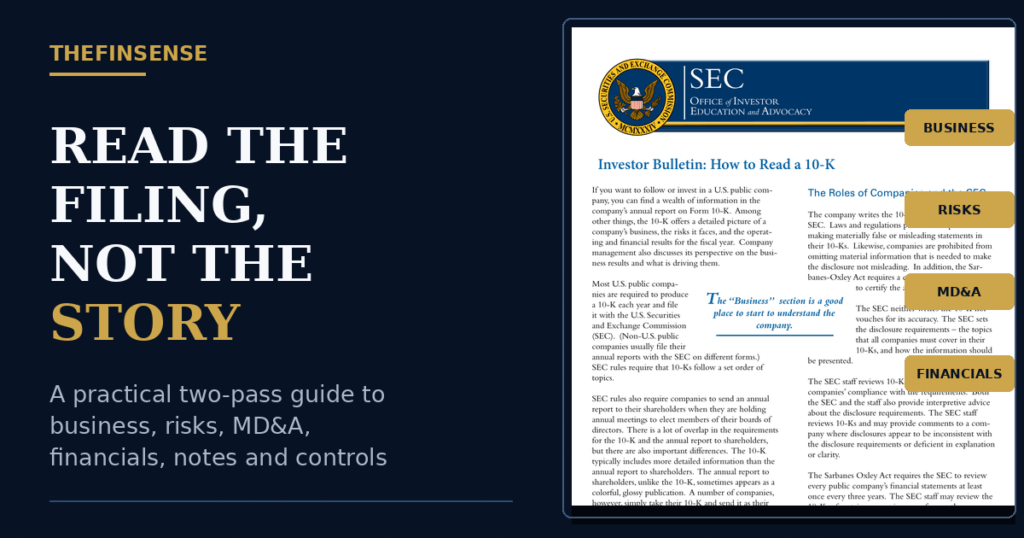
How to read a 10-K with a two-pass investor checklist

How to Read a 10-K Without Missing What Matters

Part 2: Stock Screening & Analysis

A practical decision-based workflow for reading a 10-K, comparing the filing with the prior year, reconciling MD&A with the statements and notes, and escalating audit or control concerns.

How to Read a 10-K Without Missing What Matters Read More »

CEO red flags filing checklist with an SEC proxy statement, Form 10-K, and notes for pay, deals, and succession

CEO Red Flags: 5 SEC Filing Checks Before You Buy

Part 1: Wealth Foundations

Use five SEC filing checks to separate a persuasive CEO story from evidence that deserves more diligence.

CEO Red Flags: 5 SEC Filing Checks Before You Buy Read More »

Economic moat investing framework separating business durability from stock valuation

Economic Moat: Why a Great Business Can Still Be a Bad Buy

Part 2: Stock Screening & Analysis

An economic moat can identify a durable business, but it cannot tell you whether the stock or ETF is worth buying. This guide separates rating, evidence, valuation, and portfolio fit.

Economic Moat: Why a Great Business Can Still Be a Bad Buy Read More »

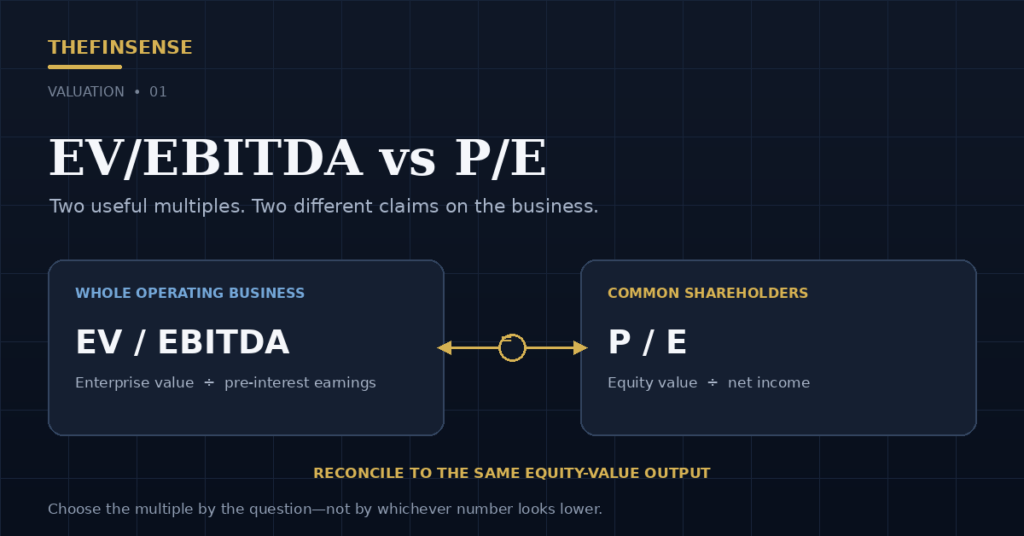
EV/EBITDA vs P/E comparison for enterprise and equity valuation

EV/EBITDA vs P/E: Which Valuation Multiple Fits the Decision?

Part 2: Stock Screening & Analysis

EV/EBITDA vs P/E: a 128.7% distortion, a $214,285 30-year gap, benchmarked against a 12.8x median APAC deal multiple.

EV/EBITDA vs P/E: Which Valuation Multiple Fits the Decision? Read More »

← Previous 1 … 4 5 6 … 10 Next →
A close-up image of stacked coins with a blurred clock, symbolizing time and money relationship.
#image_title

RECENT POSTS

  • Backdoor Roth Pro-Rata Rule: Calculate the Taxable Amount
  • Roth IRA 5-Year Rule: Which Withdrawals Can Trigger Tax?
  • Traditional IRA Deduction Limits: Income, Workplace Plans, and Partial Deductions
  • Roth IRA MAGI: Is Your Income Really Too High?
  • IRA Contribution Limits for 2026: How Much Can You Contribute?

CATEGORIES

  • Part 1: Wealth Foundations (52)
  • Part 2: Stock Screening & Analysis (13)
  • Part 3: Trading Edge (11)
  • Part 4: Macro and Markets (11)
  • Part 5: Sectors, Themes & Alternatives (3)
  • Research (1)
  • Uncategorized (2)

TheFinSense

10 BusanDaeHak Ro, Busan,
GyeongSangNam Do, South Korea

Company

  • About TheFinSense
  • Contact TheFinSense
  • Privacy Policy
  • Cookie Policy | TheFinSense
  • Editorial Policy

© 2026 TheFinSense. Educational content only. Not investment, tax, or legal advice.

Manage Consent
To provide the best experiences, we use technologies like cookies to store and/or access device information. Consenting to these technologies will allow us to process data such as browsing behavior or unique IDs on this site. Not consenting or withdrawing consent, may adversely affect certain features and functions.
Functional Always active
The technical storage or access is strictly necessary for the legitimate purpose of enabling the use of a specific service explicitly requested by the subscriber or user, or for the sole purpose of carrying out the transmission of a communication over an electronic communications network.
Preferences
The technical storage or access is necessary for the legitimate purpose of storing preferences that are not requested by the subscriber or user.
Statistics
The technical storage or access that is used exclusively for statistical purposes. The technical storage or access that is used exclusively for anonymous statistical purposes. Without a subpoena, voluntary compliance on the part of your Internet Service Provider, or additional records from a third party, information stored or retrieved for this purpose alone cannot usually be used to identify you.
Marketing
The technical storage or access is required to create user profiles to send advertising, or to track the user on a website or across several websites for similar marketing purposes.
  • Manage options
  • Manage services
  • Manage {vendor_count} vendors
  • Read more about these purposes
View preferences
  • {title}
  • {title}
  • {title}