Danny Hwang

Danny is the Lead Quant Analyst and Founder of TheFinSense. Specializing in algorithmic market trends and ETF valuation gaps, he translates complex Wall Street data into actionable, math-driven investment strategies for retail investors.

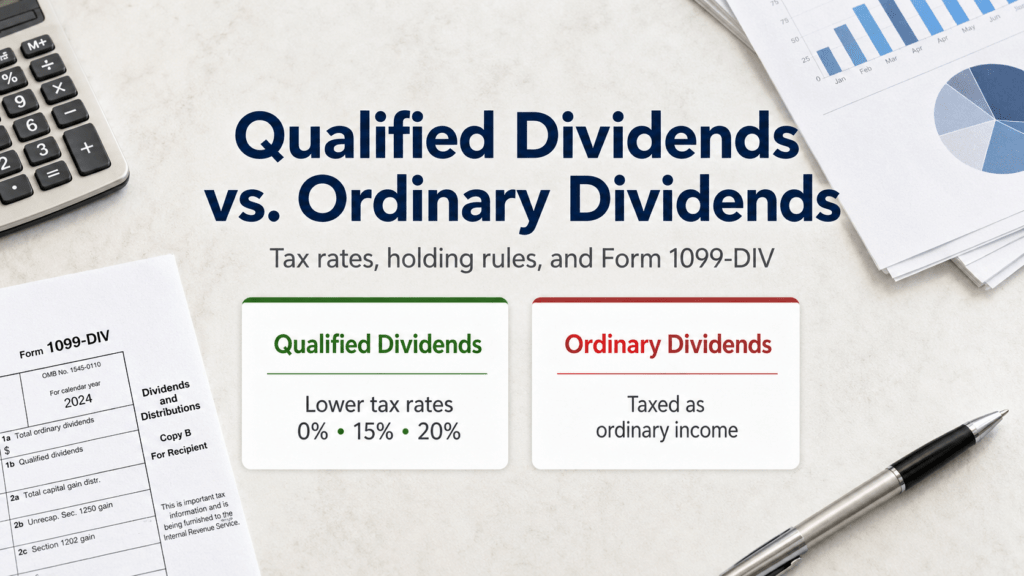
Qualified dividends compared with ordinary dividends using Form 1099-DIV and federal tax rates

Qualified Dividends: When You Get Lower Tax Rates (and When You Don’t)

Qualified dividends can receive lower federal tax rates, but an amount in Form 1099-DIV Box 1b does not automatically settle the question. Box 1b is already included in Box 1a, and your own holding period can still change how much qualifies. Before looking at the 2026 tax-rate table, answer two questions first: was the dividend

Qualified Dividends: When You Get Lower Tax Rates (and When You Don’t) Read More »

Capital gains tax stock-sale flow from basis and holding period through netting, Form 8949, and the rate layer

Capital Gains Tax on Stocks: Short-Term, Long-Term, and Cost Basis Rules

Capital gains tax on stocks starts with the sale, not the rate table. For a taxable stock sale, first find your adjusted basis and holding period. Then net the year’s capital gains and losses and choose the filing path. Apply the current-year capital-gains rate and any Net Investment Income Tax (NIIT) only after those steps.

Capital Gains Tax on Stocks: Short-Term, Long-Term, and Cost Basis Rules Read More »