
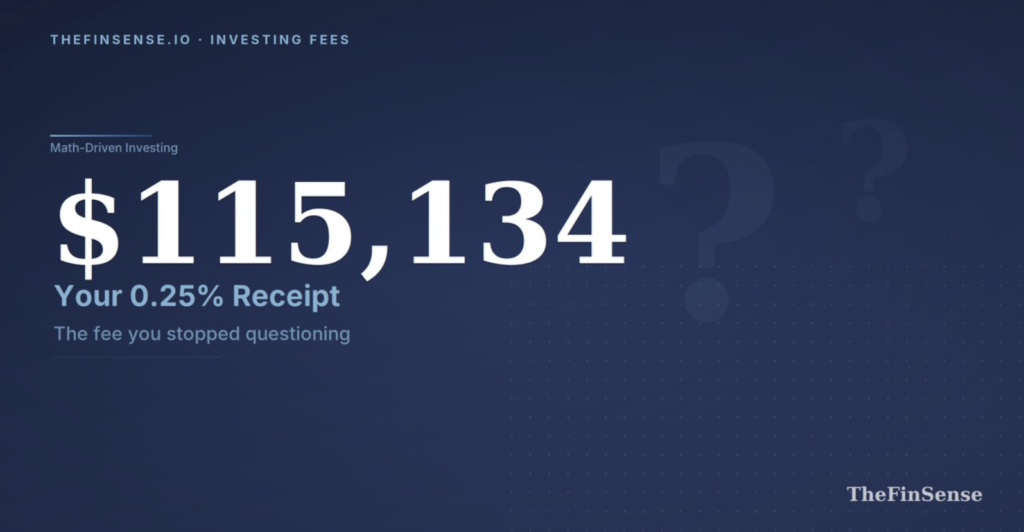
$226,487 Betterment Fees Explained: While You Automated
A 0.25% advisory fee sounds negligible. Over 30 years, it compounds into $115,134 of lost wealth on a $100K portfolio.
$226,487 Betterment Fees Explained: While You Automated Read More »
Master the core principles of investing, asset allocation, and financial mindset.
A 0.25% advisory fee sounds negligible. Over 30 years, it compounds into $115,134 of lost wealth on a $100K portfolio.
$226,487 Betterment Fees Explained: While You Automated Read More »
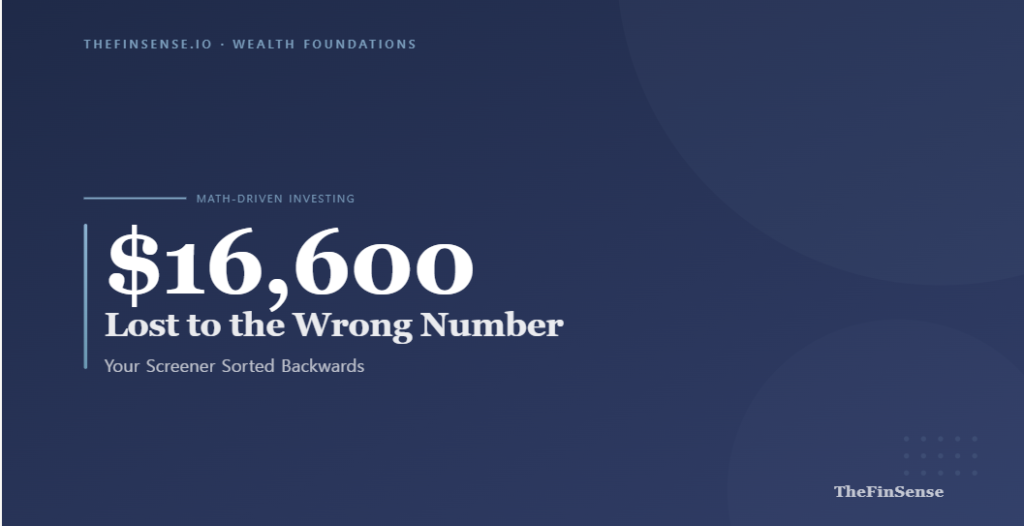
📅 Originally Published: March 21, 2026 · Last Updated: March 21, 2026 You found a stock paying multiples of what the index pays. You looked at that number on the screen, ran the mental math, and the case felt obvious. The math was right. The number was the problem. Executive Summary The Yield Trap Math:
3 Dividend Yield Traps That Destroy Your Snowball Silently Read More »

📅 Originally Published: March 19, 2026 · Last Updated: April 16, 2026 The fee that fits inside a rounding error compounds at the same monthly frequency as the wealth it promises to build. The Bottom Line, Up Front TheFinSense’s analysis of 30-year monthly compounding shows the ETFs vs mutual funds choice in a taxable brokerage
ETFs vs Mutual Funds: The 1.02% Gap That Compounds Forever Read More »

📅 Originally Published: March 14, 2026 · Last Updated: March 19, 2026 Executive Summary Bonds Are Not Cash Equivalents: Understanding how bonds work reveals that price and yield move in opposite directions — a relationship that turned long-duration Treasury ETFs into 30%+ losers in 2022, despite being government-backed. Duration Is the Risk Dial, Not a
How Bonds Work: The Airbag Most Portfolios Skip Read More »
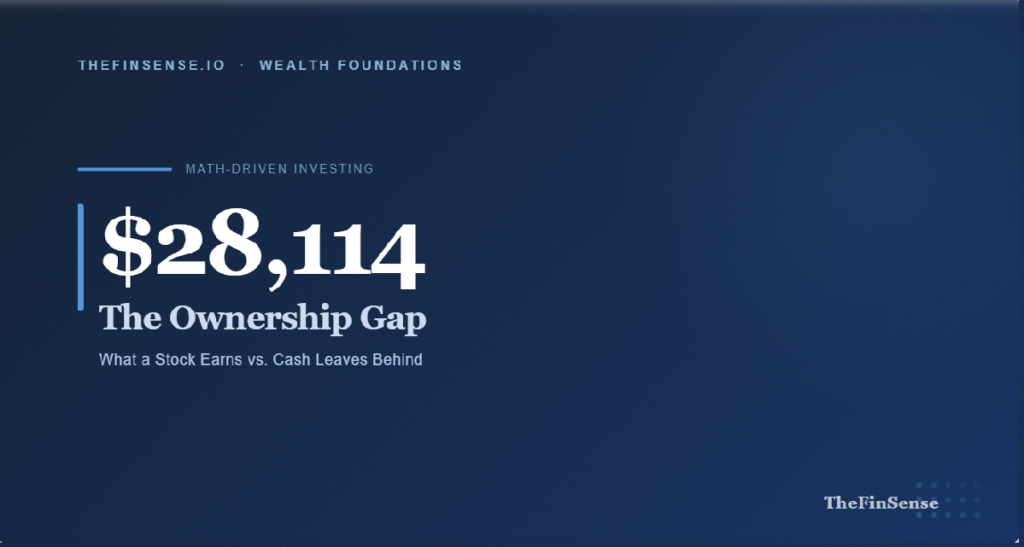
📅 Originally Published: March 14, 2026 · Last Updated: March 14, 2026 The Bottom Line, Up Front A stock is not a bet on a price chart — it is a legally binding fractional claim on a real company’s assets and future earnings. Once you internalize that distinction, every portfolio decision changes: you stop chasing
What Is a Stock? The Ownership Math Beginners Miss Read More »

📅 Originally Published: March 12, 2026 · Last Updated: March 19, 2026 Executive Summary The APY Illusion: Safe investments to beat inflation require post-tax real yield math — a 4.0% HYSA can deliver a sub-2.7% after-tax return, actively destroying purchasing power when Core PCE runs above that threshold. The Tax-Shield Edge: T-Bills are exempt from
Safe Investments to Beat Inflation: HYSA vs T-Bills Ranked Read More »
📋 TL;DR (Too Long; Didn’t Read) The Problem: Fundamental Analysis tells you what to buy; Technical Analysis tells you when to buy. The Solution: Charts are the “User Interface” of market psychology. The Strategy: The C.S.I. Method. Context: Is the trend your friend? (The River). Structure: Where are the Floors? (Support). Ignition: What is the
Charts Don’t Lie: The C.S.I. Method for Reading Any Chart Read More »

📅 Originally Published: January 26, 2026 · Last Updated: March 20, 2026 The dashboard says 100% reinvested. Your 1099-DIV says you owe taxes on every dollar of it. Nobody told you both statements could be true at the same time. This Guide Answers Why does reinvesting 100% of your dividends still generate an annual tax
$589,115 Dividend Tax Drag: Dividends Are Not Free Money Read More »
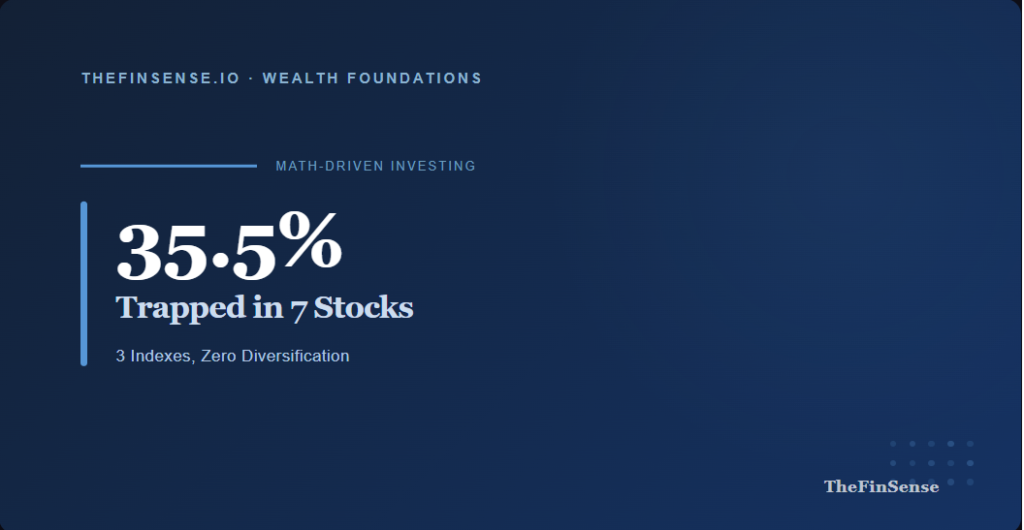
📅 Originally Published: Dec 28, 2025 · Last Updated: March 19, 2026 Executive Summary The overlap is quantifiable — and larger than you think: A 50/50 split between VOO and QQQ concentrates 35.5% of your entire portfolio into just 7 mega-cap tech stocks. The dow vs nasdaq vs sp500 comparison reveals a structural duplication problem
Dow vs Nasdaq vs SP500: 35% Trapped in 7 Stocks Read More »
📅 Originally Published: January 15, 2026 · Last Updated: April 18, 2026 The ticker you type shapes the balance you keep. Executive Summary Over 15 years, 88% of large-cap active managers fail to beat the S&P 500, making passive indexing the statistically dominant choice — yet the default ticker most retail investors pick (SPY) quietly
How to Invest in SP500 ETFs: The 30% Tax Trap Inside VOO Read More »