

Brokerage Sweep Account Rates: Audit Your Idle Cash
SOCIAL_EXCERPT: The largest U.S. brokerage pays 0.01% on idle cash.
A competitor pays 3.31%. The ten-year gap on $50,000 is $19,198
Brokerage Sweep Account Rates: Audit Your Idle Cash Read More »

SOCIAL_EXCERPT: The largest U.S. brokerage pays 0.01% on idle cash.
A competitor pays 3.31%. The ten-year gap on $50,000 is $19,198
Brokerage Sweep Account Rates: Audit Your Idle Cash Read More »
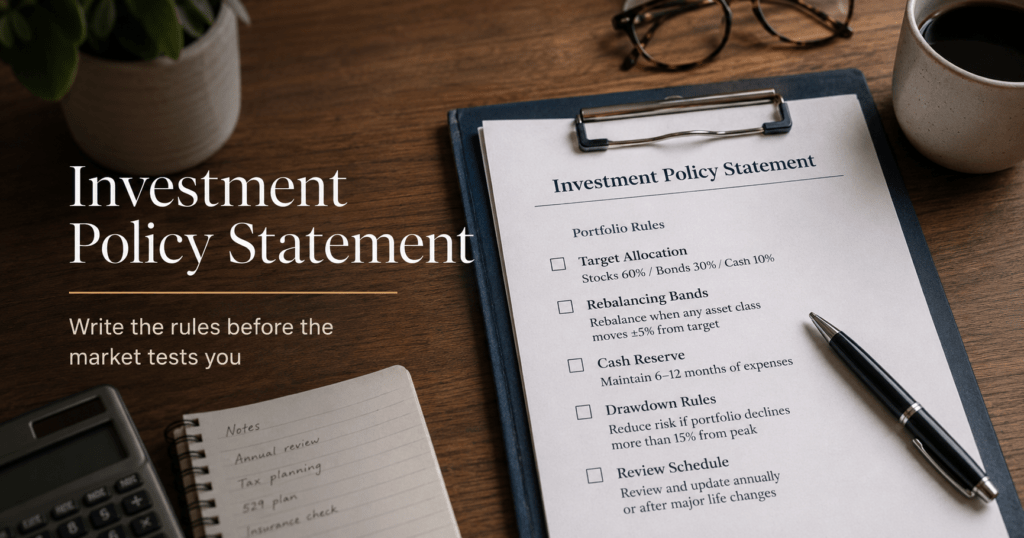
Self-directed investors who skip a written investment policy statement sacrifice 1.50% annually in behavioral drag. That drag compounds to a $394,246 gap over 30 years.
Investment Policy Statement: Write Rules Before You Panic Read More »

Fear, FOMO, regret, and boredom do not need to disappear before you invest well. Use a written pre-trade process to check what changed, whether a rule permits the trade, and what costs or cash needs matter before emotion reaches the order ticket.
Investing Psychology: What to Do Before an Emotional Trade Read More »
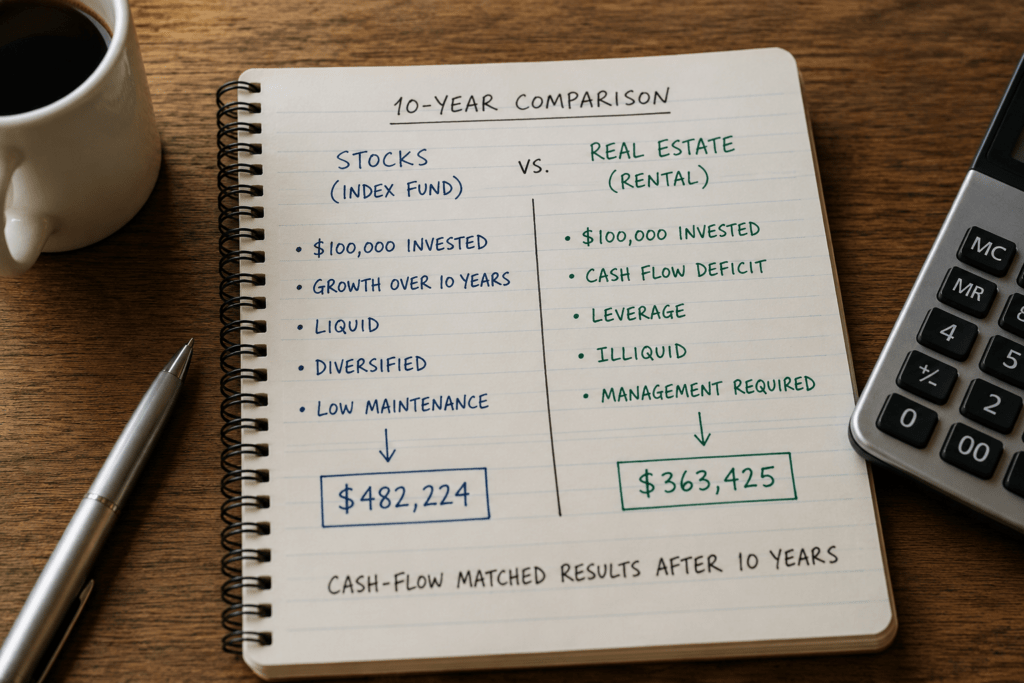
📅 Originally Published: March 16, 2026 · Last Updated: August 23, 2026 Answer first: Under the base assumptions, the S&P 500 wins the timing-adjusted comparison. The rental earns an estimated 6.41% internal rate of return (IRR), below the model’s 10.37% index return. Gross equity points the other way because it ignores the owner’s annual cash
Stocks vs Real Estate: A $100K 10-Year Comparison Read More »
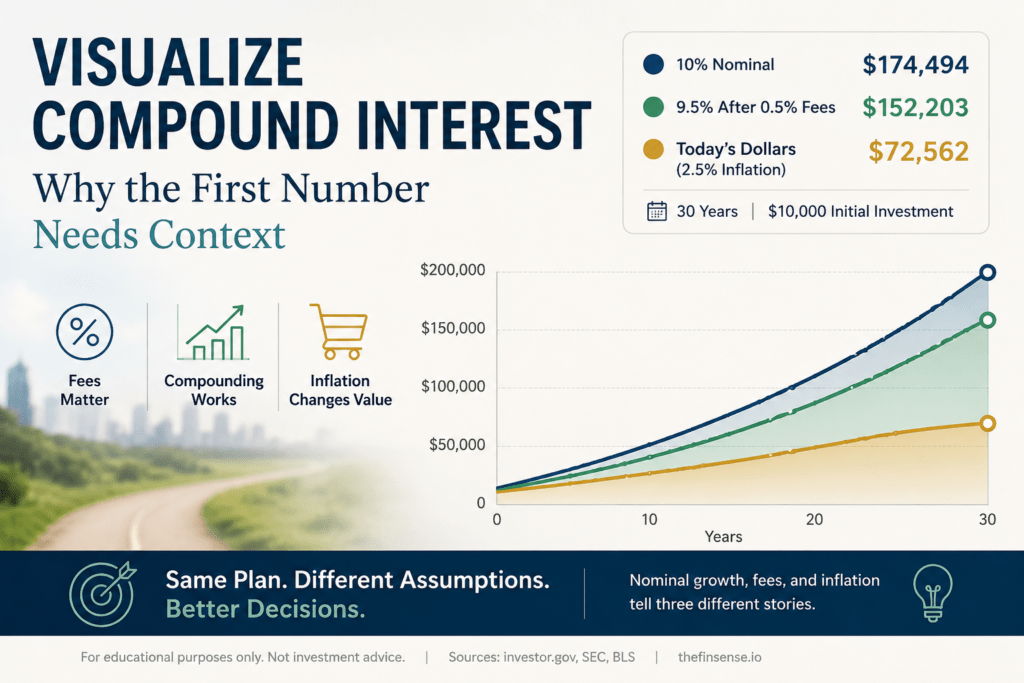
📅 Originally Published: March 16, 2026 · Last Updated: August 23, 2026 Answer first: For compound interest after fees and inflation, one future-balance number is not enough. Separate the nominal account balance, the balance after costs that are not already reflected in your return input, and the purchasing power of that money in today’s dollars.
Compound Interest After Fees and Inflation: What the Balance Really Means Read More »
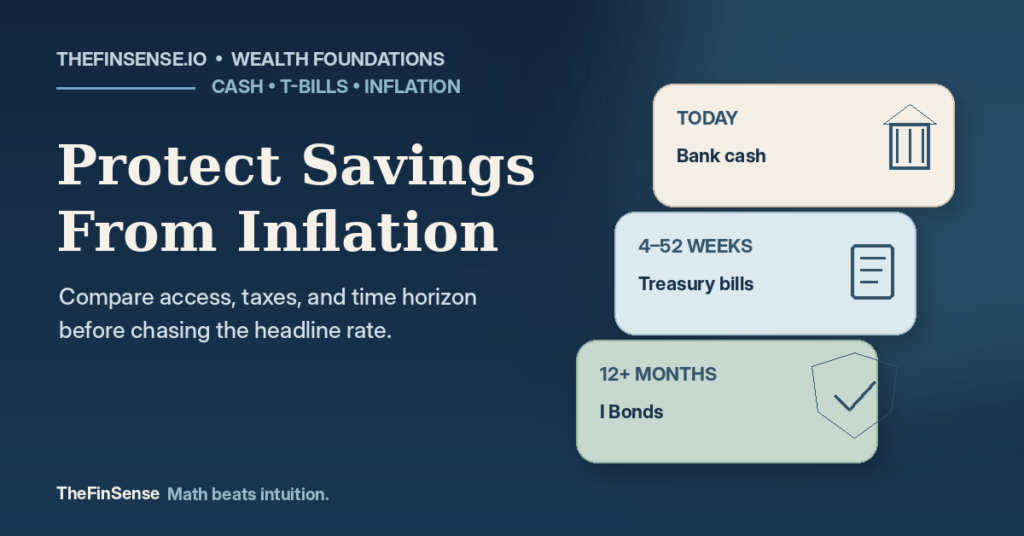
📅 Originally Published: March 13, 2026 · Last Updated: August 23, 2026 · The worked HYSA, Treasury bill, and CPI comparison preserves a July 11, 2026 decision snapshot; fund yields and bond terms are separately dated. Answer first: To protect savings from inflation without creating a liquidity problem, stop treating the whole cash reserve as
How to Protect Savings From Inflation Without Locking Up Emergency Cash Read More »