Stock Screening AnalysisWhere the Story Meets the Numbers
Every company has a story. The numbers decide whether it holds up.
We examine business quality, cash flow, balance-sheet risk, valuation, and the expectations already built into the share price.
Primary Sources
Financial Statements
Valuation & Risk
Our Research Lens
How Our Stock Screening Analysis Works
Stock screening analysis should narrow the field, not manufacture certainty. We use a repeatable checklist to separate an attractive business from an attractive stock, identify the assumptions behind the valuation, and make the downside visible before discussing the upside.
01 · Business
Is the business getting stronger?
We look at the revenue engine, margins, competitive position, customer concentration, and whether growth is creating real economic value.
02 · Financials
Do the earnings turn into cash?
We compare reported earnings with cash flow, capital needs, debt, dilution, and the balance-sheet capacity to survive a weaker cycle.
03 · Price
What is the market already assuming?
We test valuation against realistic growth, margins, catalysts, and the conditions that would weaken or break the investment thesis.
Independent research notes for education and further due diligence, not personalized investment advice.
Research Library
Latest Stock Screening Analysis
Company breakdowns, earnings reviews, valuation checks, and watchlist research.
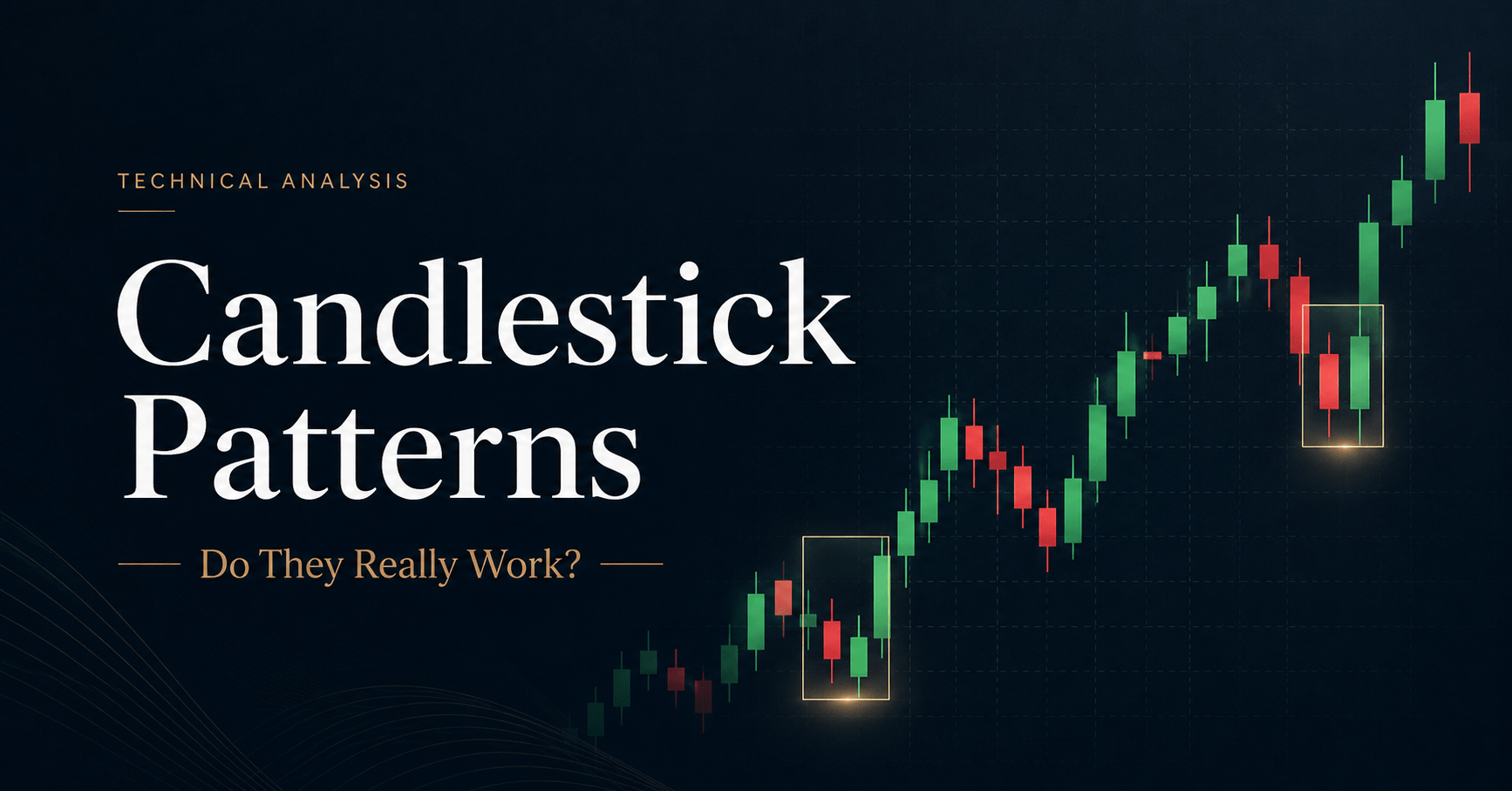
May 2, 2026
Candlestick Patterns Look Precise. The Profit Math Usually Isn’t.
A 53% candlestick win rate still loses money once a 0.20% round-trip cost lands on the same line. Break-even sits at 54%.
Read the analysis →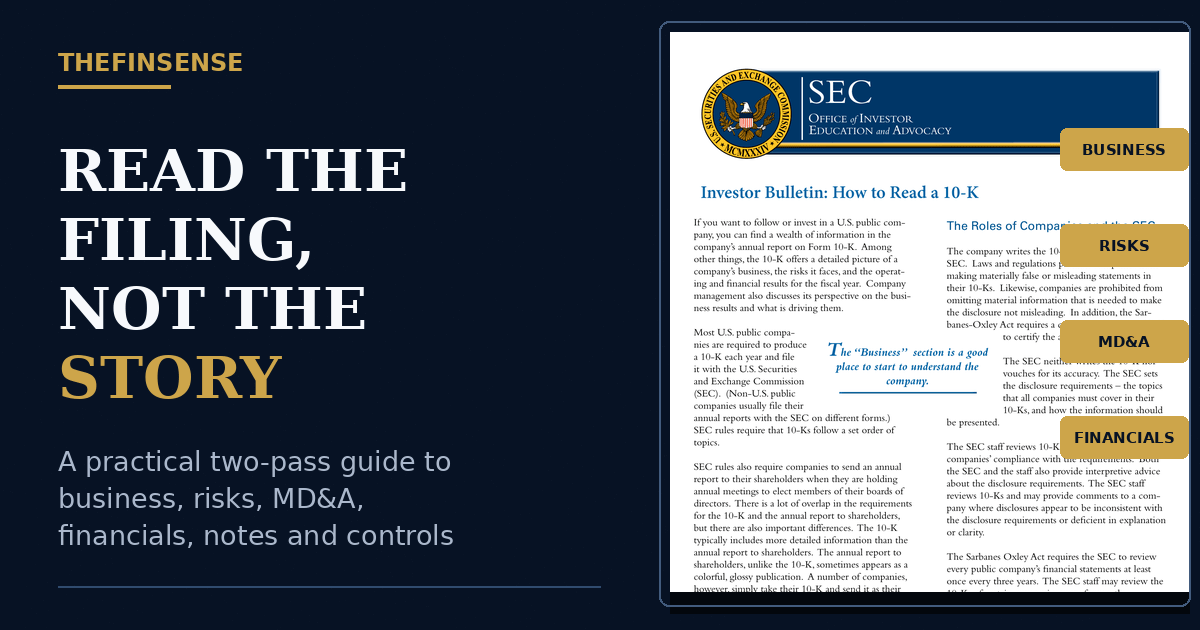
Apr 28, 2026
How to Read a 10-K Without Missing What Matters
A practical decision-based workflow for reading a 10-K, comparing the filing with the prior year, reconciling MD&A with the statements and notes, and escalating audit or control concerns.
Read the analysis →
Apr 25, 2026
Economic Moat: Why a Great Business Can Still Be a Bad Buy
An economic moat can identify a durable business, but it cannot tell you whether the stock or ETF is worth buying. This guide separates rating, evidence, valuation, and portfolio fit.
Read the analysis →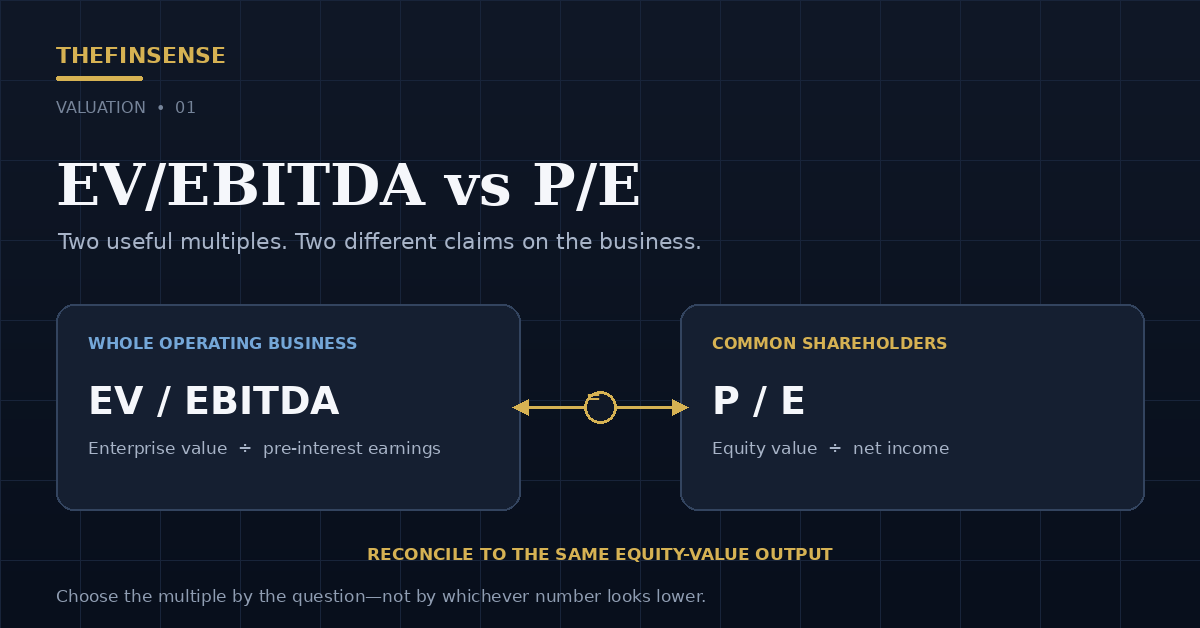
Apr 24, 2026
EV/EBITDA vs P/E: Which Valuation Multiple Fits the Decision?
EV/EBITDA vs P/E: a 128.7% distortion, a $214,285 30-year gap, benchmarked against a 12.8x median APAC deal multiple.
Read the analysis →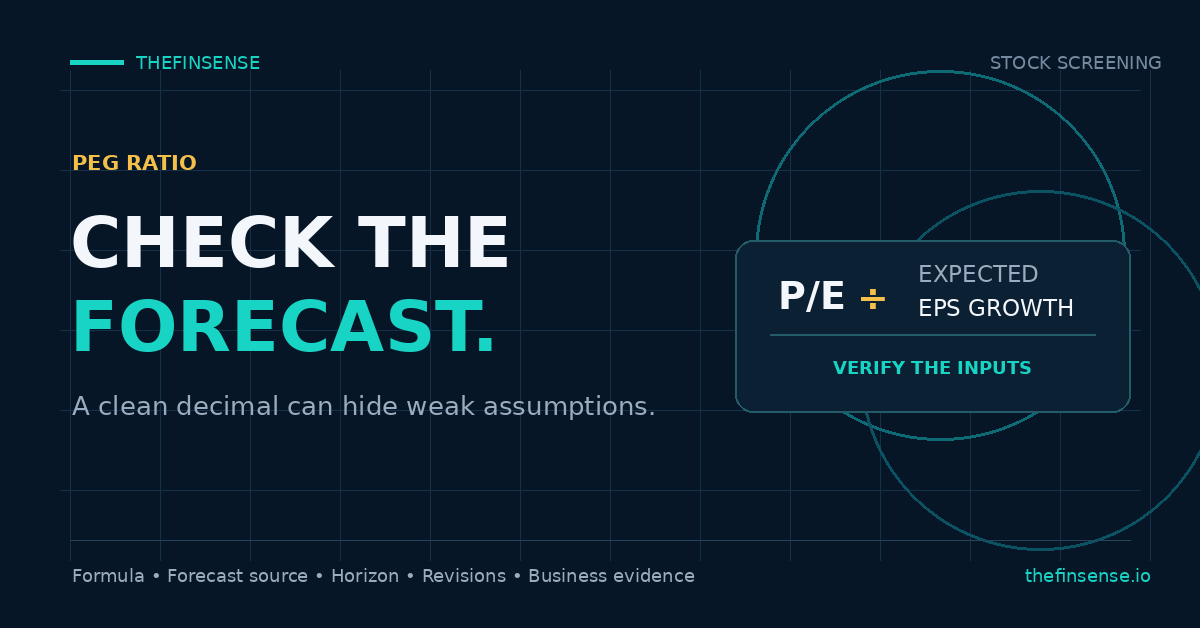
Apr 22, 2026
PEG Ratio: Why a Low Number Can Still Mislead You
A low PEG can look precise while hiding stale or mismatched growth assumptions. This guide shows how to check the formula, revisions, and business evidence before relying on the screen.
Read the analysis →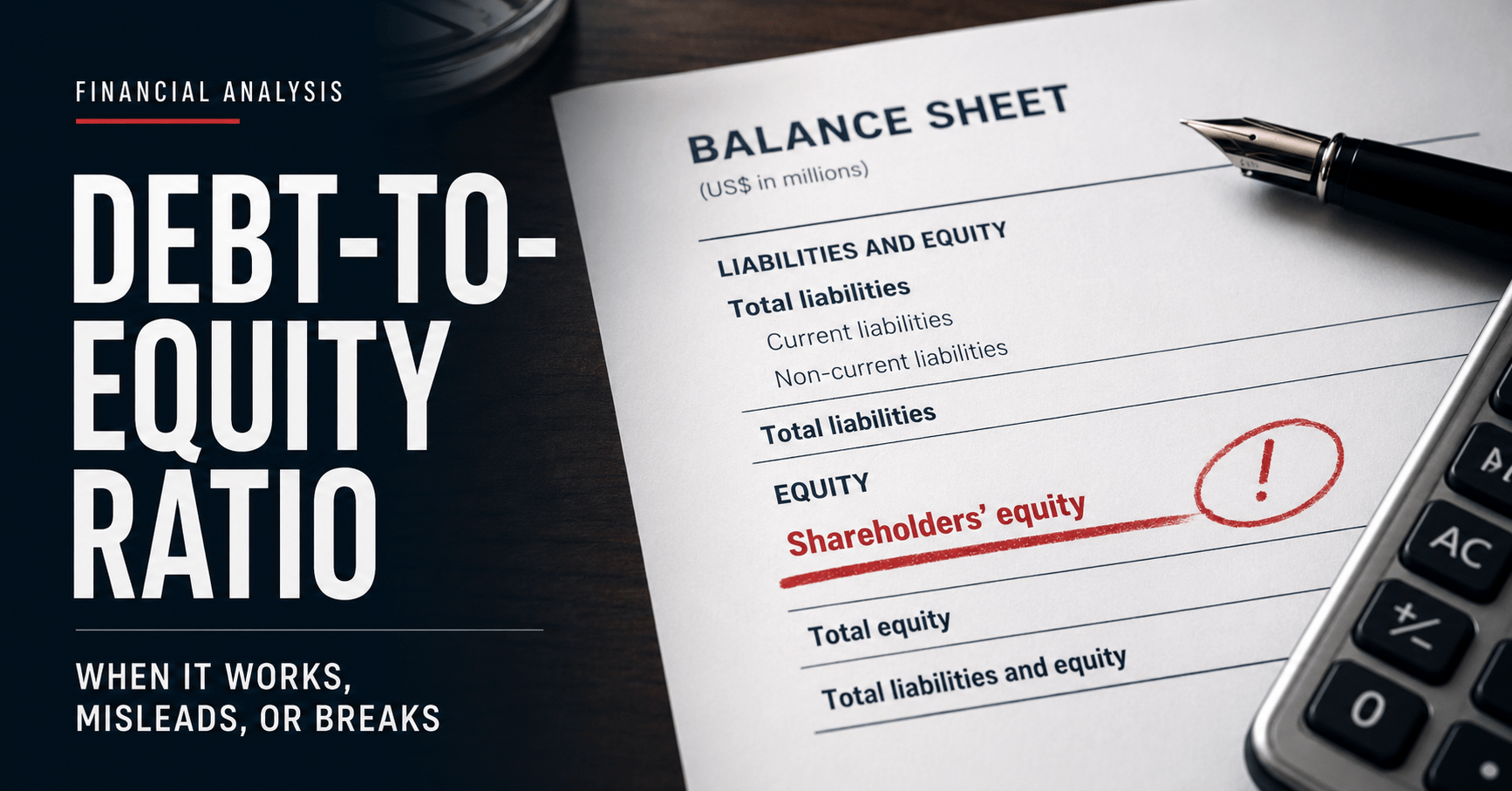
Apr 20, 2026
Debt-to-Equity Ratio: When It Works, Misleads, or Breaks
The debt-to-equity ratio stops being a comparison tool once shareholders' equity crosses zero. A three-regime ladder replaces the single-scale reflex.
Read the analysis →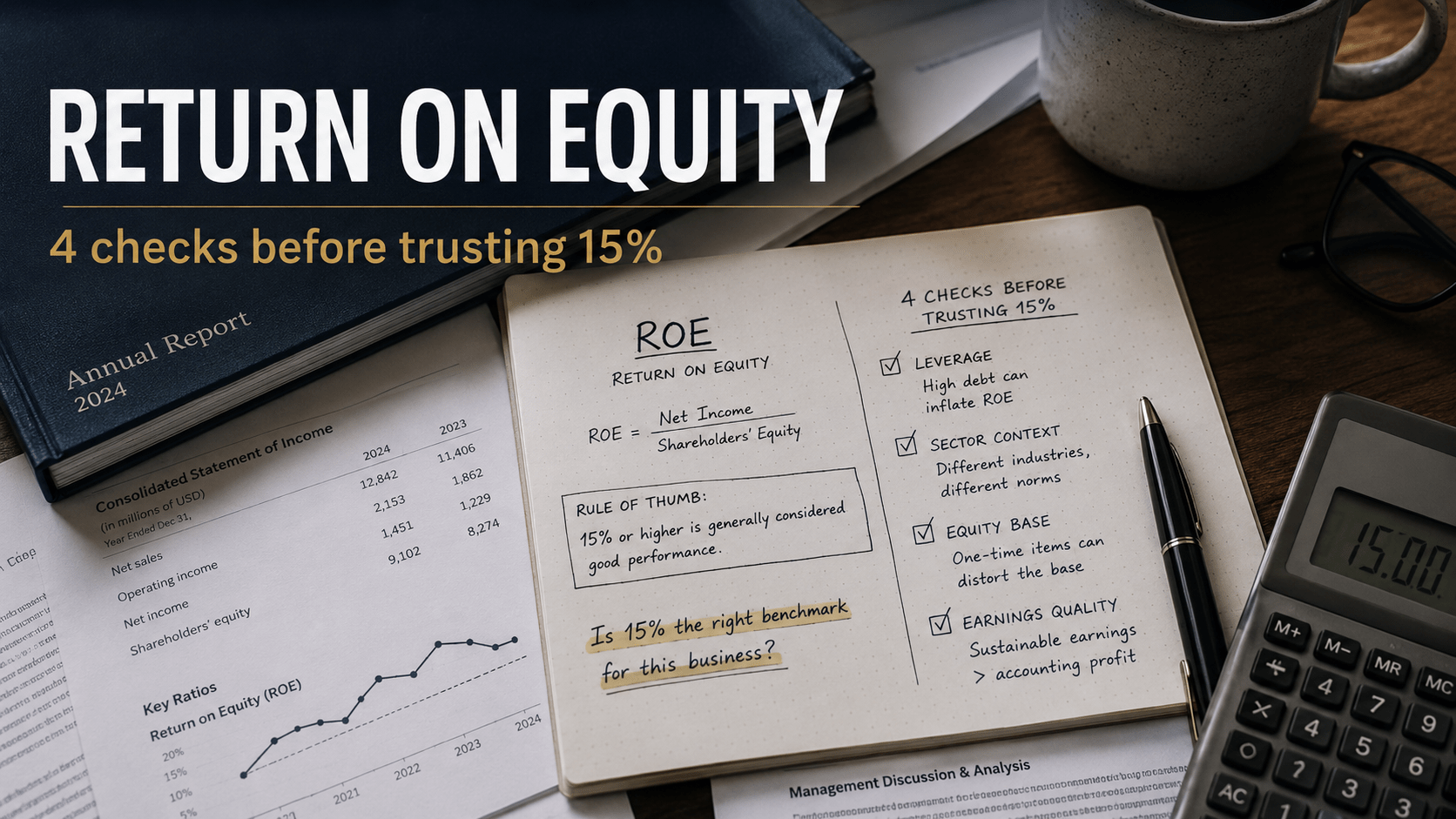
Apr 18, 2026
Return on Equity: 4 Checks Before You Trust a High ROE
Buffett's 15% return on equity threshold sits only 0.56 percentage points above the adjusted ex-financial US market average of 14.44%, per Damodaran's January 2026 dataset.
Read the analysis →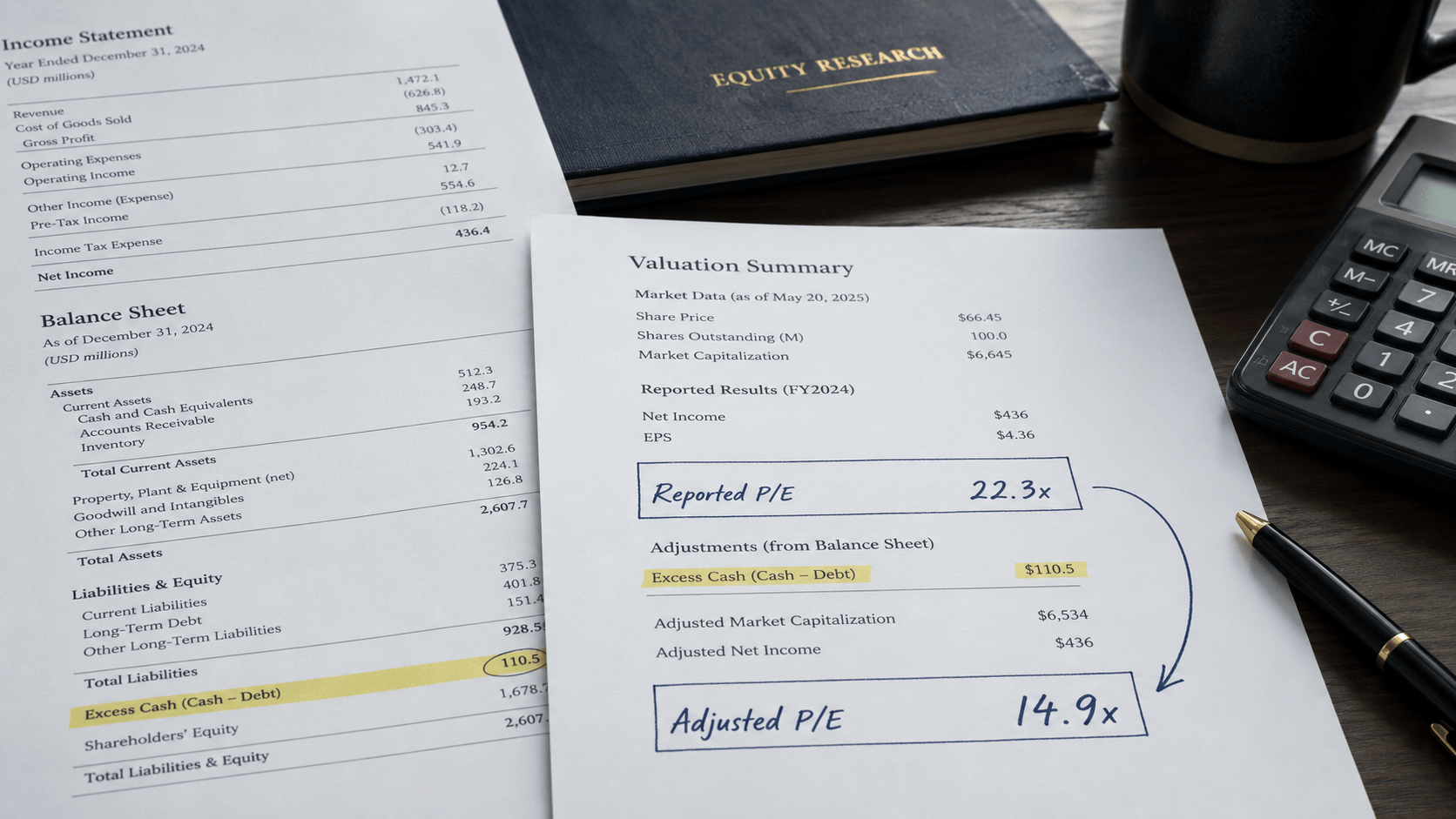
Apr 17, 2026
Adjusted P/E Ratio: When Reported P/E Misleads
Reported P/E can mislead when excess cash, unusual earnings, or capital structure distort the comparison. Use the cash-adjusted P/E calculator to test the adjustment, then compare the result with the…
Read the analysis →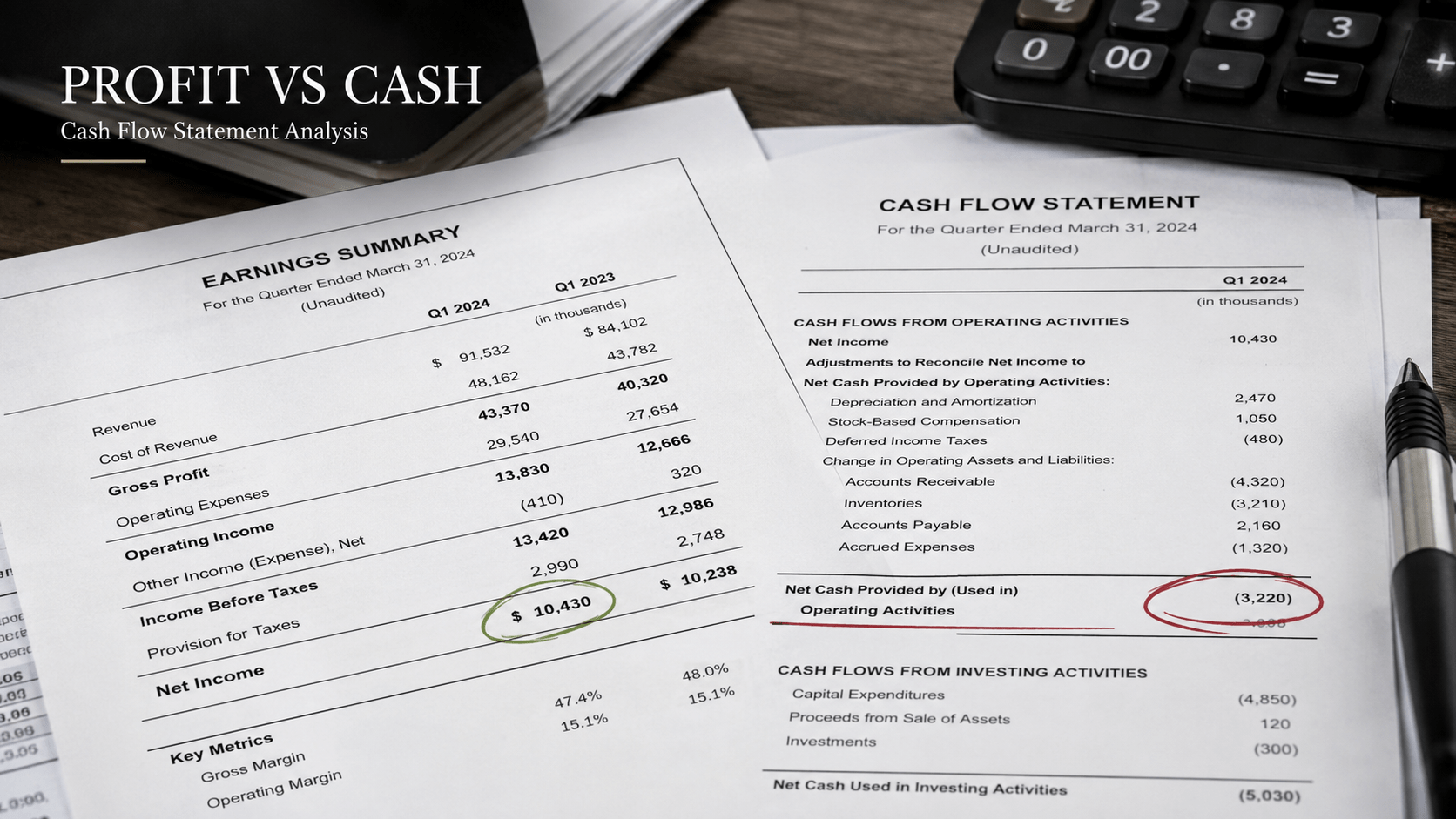
Apr 15, 2026
Cash Flow Statement Analysis: How to Read Profit vs. Cash
Accrual accounting lets profitable companies hide cash deterioration. Adding one cash flow ratio to screening raises failure prediction from 76.7% to 82.9% — a blind spot that compounds to $264,728…
Read the analysis →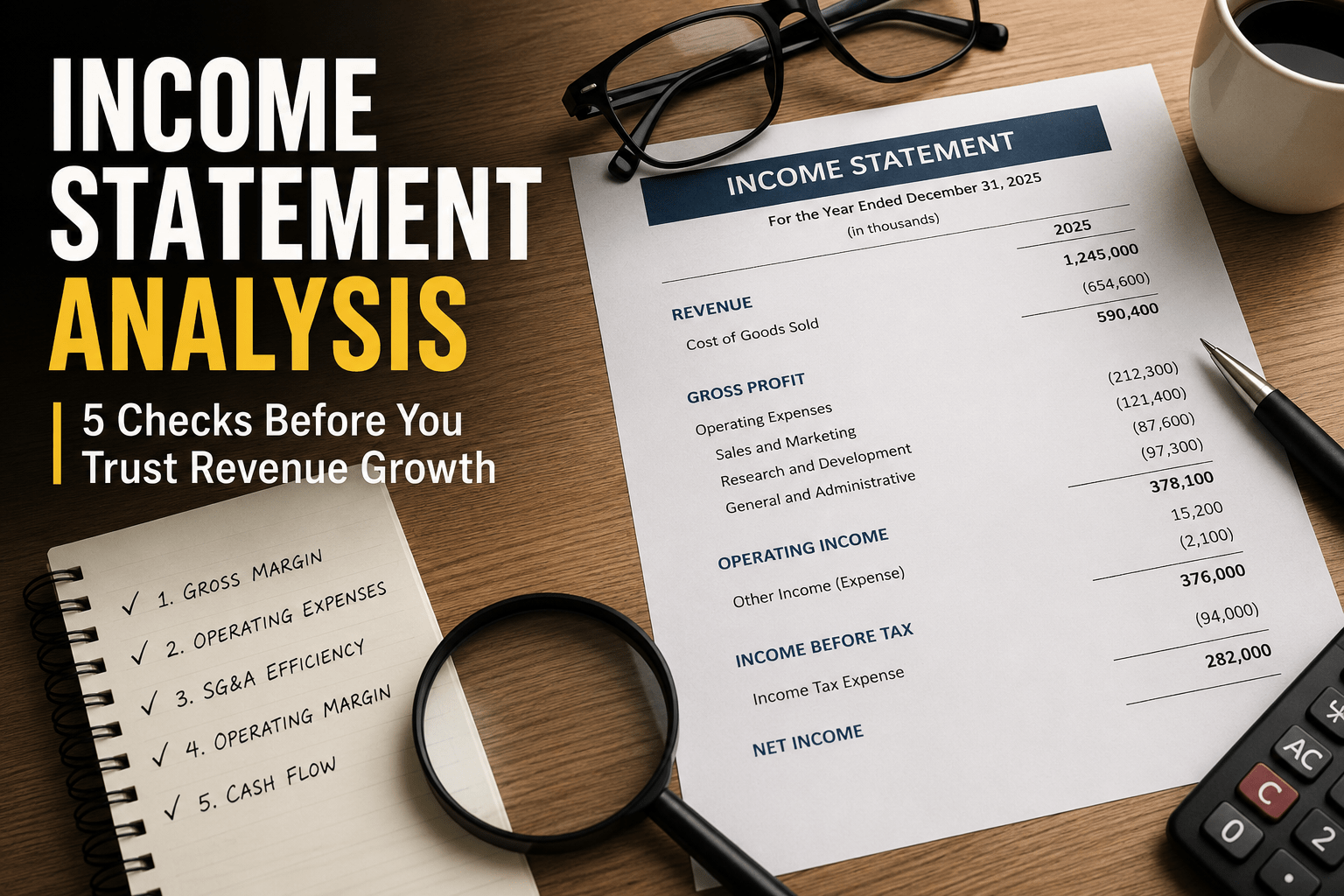
Apr 14, 2026
Income Statement Analysis: 5 Checks Before You Trust Revenue Growth
SG&A rises 0.55% per 1% sales increase — but falls only 0.35% per 1% decrease. The 0.20pp asymmetry compounds one revenue miss into a $100,340 gap over 30 years. Five…
Read the analysis →