
Macro & Markets
Choose a guide to inflation, economic releases, currency exposure, or global diversification.
About this section and its research approachResearch Library
Latest Macro & Markets Analysis
Inflation, interest rates, currencies, market cycles, global diversification, commodities, and economic indicators.
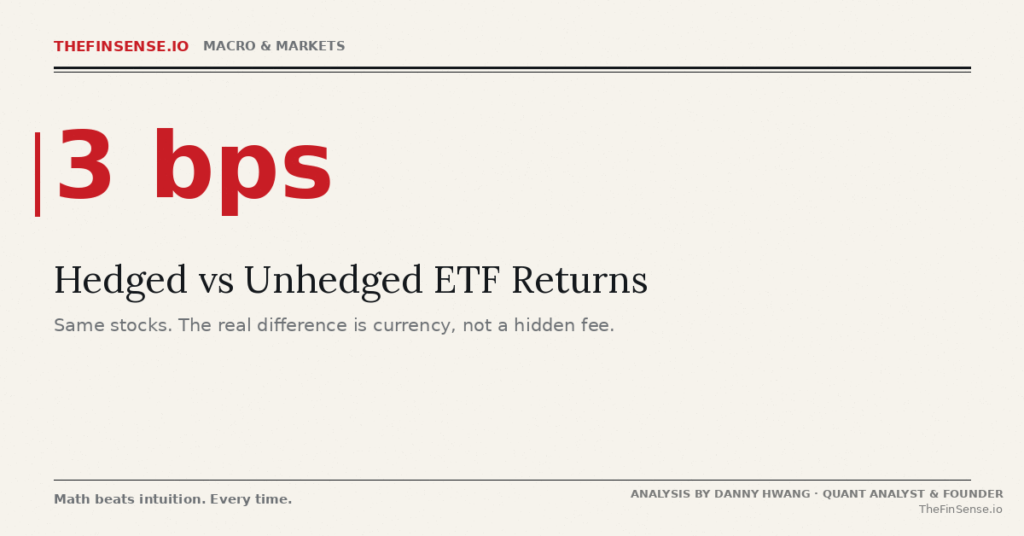
Jul 16, 2026
Hedged vs Unhedged ETF Returns: Currency Risk, Fees and Scenarios
Currency exposure drives the HEFA-versus-EFA comparison. Separate dated fund fees from hypothetical trading-cost assumptions and modeled long-term gaps.
Read the analysis →Jul 12, 2026
Why Emerging Markets Underperform: 15 Markets, 1 Growth Trap
Why emerging markets underperform despite GDP growth: compare 15 markets and see how share dilution can keep economic growth from reaching shareholders.
Read the analysis →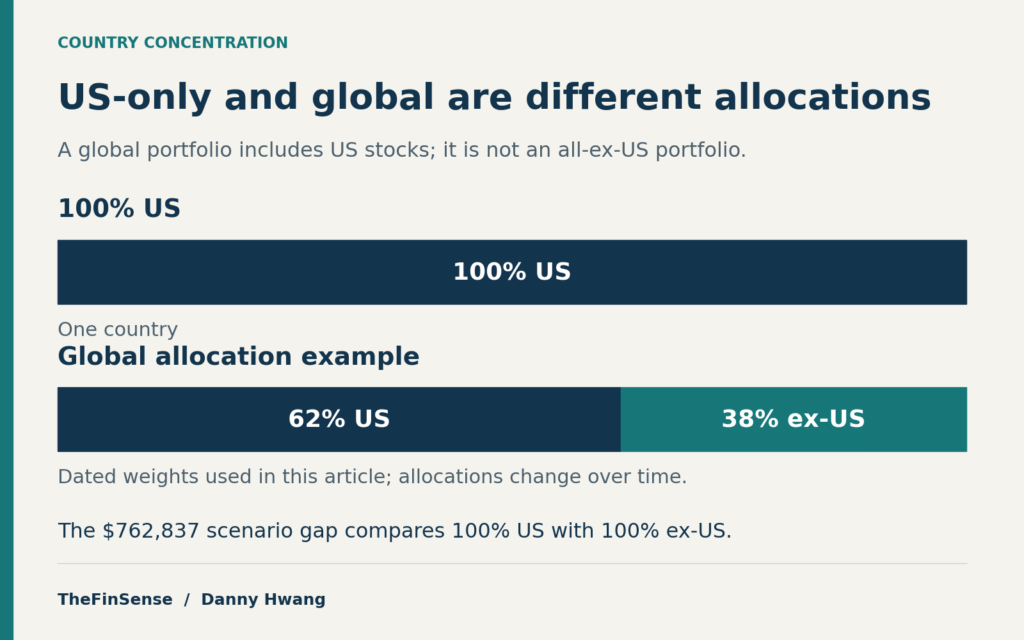
Jul 8, 2026
100% US vs Global Portfolio: What Diversification Changes
Compare US-only, all-ex-US, and global portfolio scenarios without mistaking historical averages for forecasts. The foreign-leading case is hypothetical and the developed/emerging comparison uses a different market split.
Read the analysis →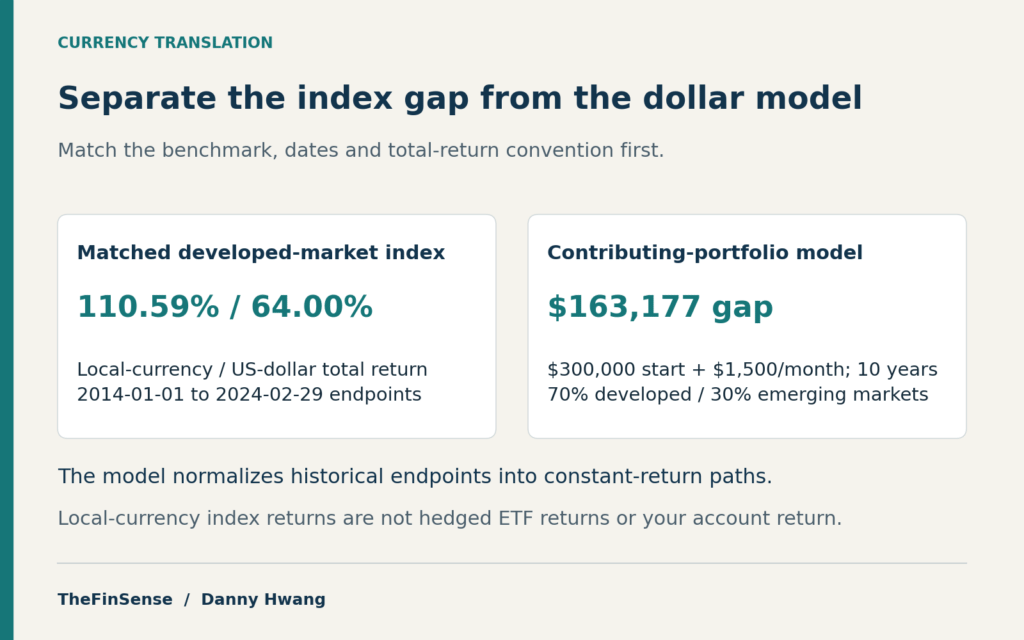
Jul 4, 2026
Strong Dollar and International ETFs: 2 Costly Return Gaps
A strong dollar can shrink international ETF returns. Compare two MSCI indexes in local currency and dollars, then test the model's hedging-cost assumptions.
Read the analysis →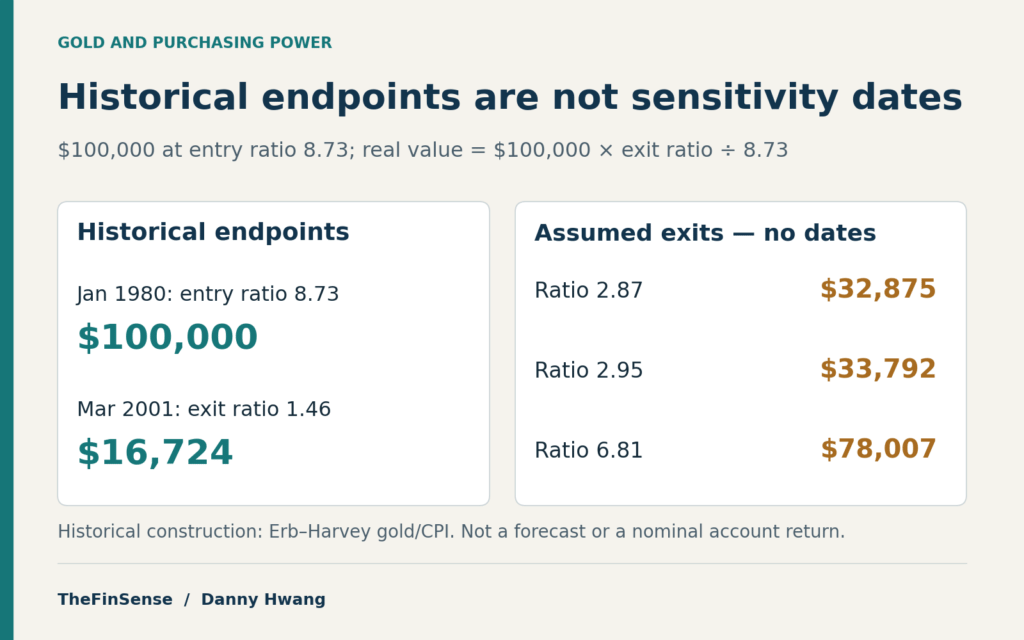
Jun 30, 2026
Is Gold an Inflation Hedge? The Costly 1980 Lesson
Is gold an inflation hedge? The 1980 real-price peak led to a decades-long purchasing-power decline. Test the endpoints and see where protection fails.
Read the analysis →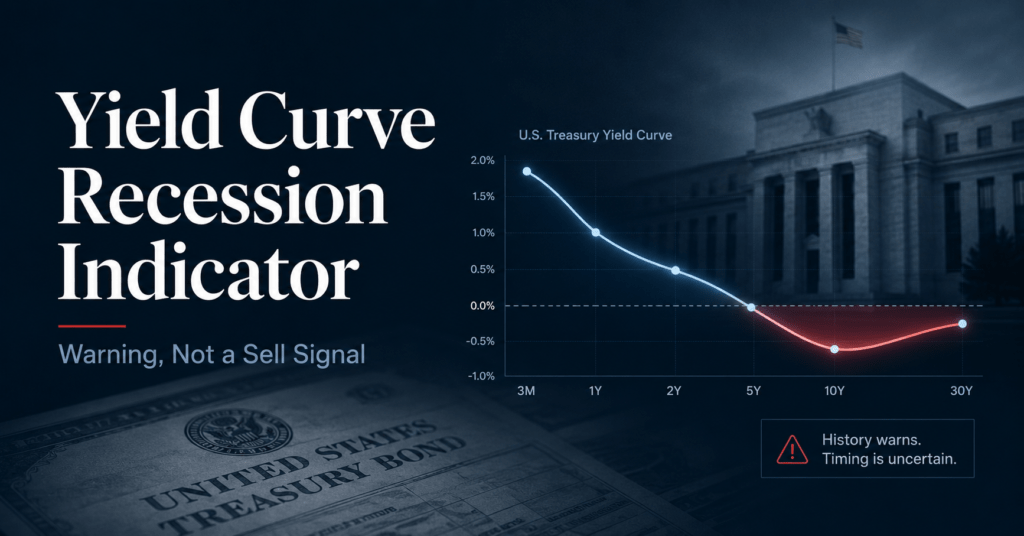
Jun 27, 2026
Yield Curve Recession Indicator: Warning, Not a Sell Signal
The yield curve recession indicator can warn of rising recession risk, but it gives no stock exit date. See the research, the 2022 episode, and what to check.
Read the analysis →
Jun 22, 2026
Business Cycle Investing: Why Sector Rotation Is Hard to Trade
Even with perfect timing of turning points, conventional sector rotation matched the market's 0.21 Sharpe ratio from 1948 to 2022. See why stage dating and costs make it hard to…
Read the analysis →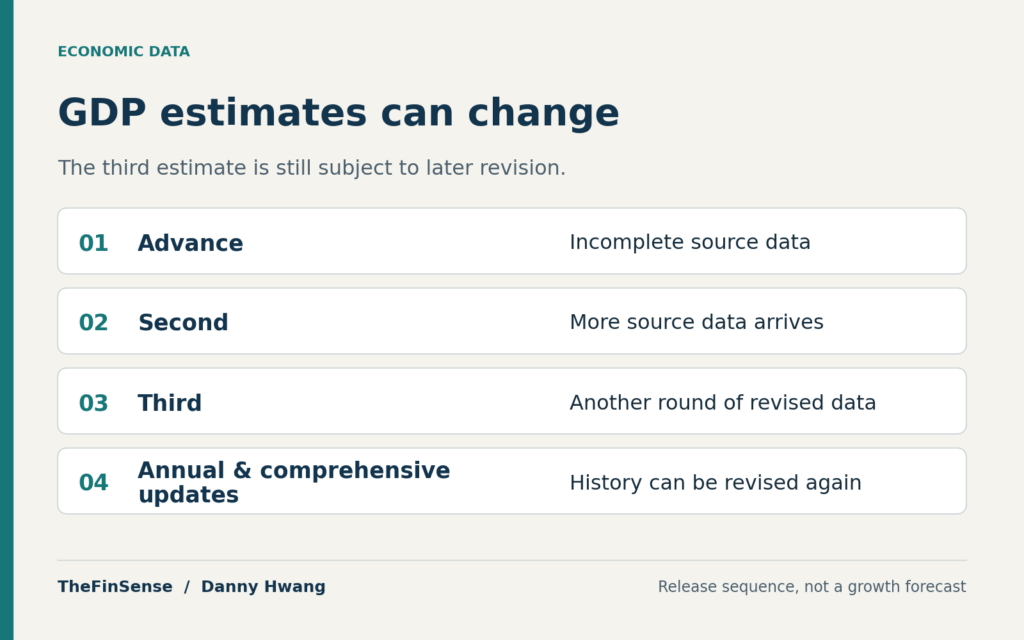
Jun 18, 2026
Why GDP Is a Lagging Indicator and Why the First Estimate Can Mislead Investors
GDP arrives after the quarter and changes as fuller data comes in. This guide compares official estimate vintages and gives investors a practical rule for deciding whether a headline warrants…
Read the analysis →
Jun 15, 2026
Strong Jobs Report: 3 Steps From Good News to Falling Stocks
A strong jobs report can still hurt stocks. Trace hiring surprises, rate expectations and stock valuations before treating good news as a buy signal.
Read the analysis →
Jun 10, 2026
CPI vs PCE Inflation: Which Gauge Should You Use?
CPI and PCE serve different purposes. Follow the exact index named in a payment rule, use PCE to interpret Fed policy, and test personal plans with explicit inflation assumptions. The…
Read the analysis →About this section and its research approach
Macro & MarketsRead the Cycle Without Trading Every Headline
Macro data matters, but the first interpretation is often the least useful one.
We connect inflation, rates, currencies, growth, and market regimes to the portfolio decisions they can actually change.
Official Data
Historical Regimes
Portfolio Context
The Transmission Chain
How We Turn Macro Data Into Portfolio Context
Economic releases do not move every asset through the same channel or on the same timetable. We separate the indicator from the mechanism, then ask whether the result is large and durable enough to justify a portfolio decision.
01 · Indicator
What does the data actually measure?
We define the release, revision process, time window, and denominator before using it as evidence about the economy or markets.
02 · Transmission
How could it reach asset prices?
Rates, earnings, currencies, credit conditions, and valuation multiples are traced separately instead of treating one headline as a universal market cause.
03 · Portfolio
Is the effect actionable or merely interesting?
We compare the signal with diversification, implementation costs, and the risk of acting after the information is already reflected in prices.
Macro and market analysis for education and portfolio context, not a forecast or personalized allocation recommendation.