
Wealth Foundations
Find a guide for account choices, IRA rules, investment taxes, and the costs that affect long-term returns.
About this section and its research approachResearch Library
Latest Wealth Foundations Guides
Investing basics, account strategy, portfolio construction, fees, taxes, and long-term decision rules.
Oct 23, 2026
HSA Contribution Limits: How Much Can You Really Add?
The annual HSA limit is only the starting point. Employer deposits, eligible months and spouse allocation can change what you can still contribute. Work through the 2026 and 2027 rules,…
Read the analysis →
Oct 15, 2026
Backdoor Roth Pro-Rata Rule: Calculate the Taxable Amount
A separate IRA does not isolate your after-tax contribution. See which balances count, calculate the taxable conversion and carry forward unused basis with 2025 Form 8606 examples.
Read the analysis →
Oct 11, 2026
Roth IRA 5-Year Rule: Which Withdrawals Can Trigger Tax?
Your remaining regular contributions have no five-year wait. Conversions and earnings follow different rules. Compare the three layers, check the two clocks and see where a withdrawal goes with the…
Read the analysis →
Oct 8, 2026
Traditional IRA Deduction Limits: Income, Workplace Plans, and Partial Deductions
Check your contribution year, workplace coverage, and Traditional IRA deduction MAGI. Compare 2026 income ranges, different results for spouses, and two contribution examples, then connect the nondeductible amount to Form…
Read the analysis →
Oct 6, 2026
Roth IRA MAGI: Is Your Income Really Too High?
Your AGI may not be the income figure that decides Roth IRA eligibility. Use the calculator and three worked examples to see how conversions and deductions change your MAGI, then…
Read the analysis →
Oct 4, 2026
IRA Contribution Limits for 2026: How Much Can You Contribute?
Check 2026 IRA contribution limits, calculate remaining room across Traditional and Roth accounts, and review compensation and separate eligibility rules.
Read the analysis →
Oct 2, 2026
401(k) Loan vs. Withdrawal: Taxes, Repayment, and Job-Loss Risk
Compare the cash a 401(k) loan or withdrawal can provide, the payment your budget must support, and the plan terms that matter when leaving an employer.
Read the analysis →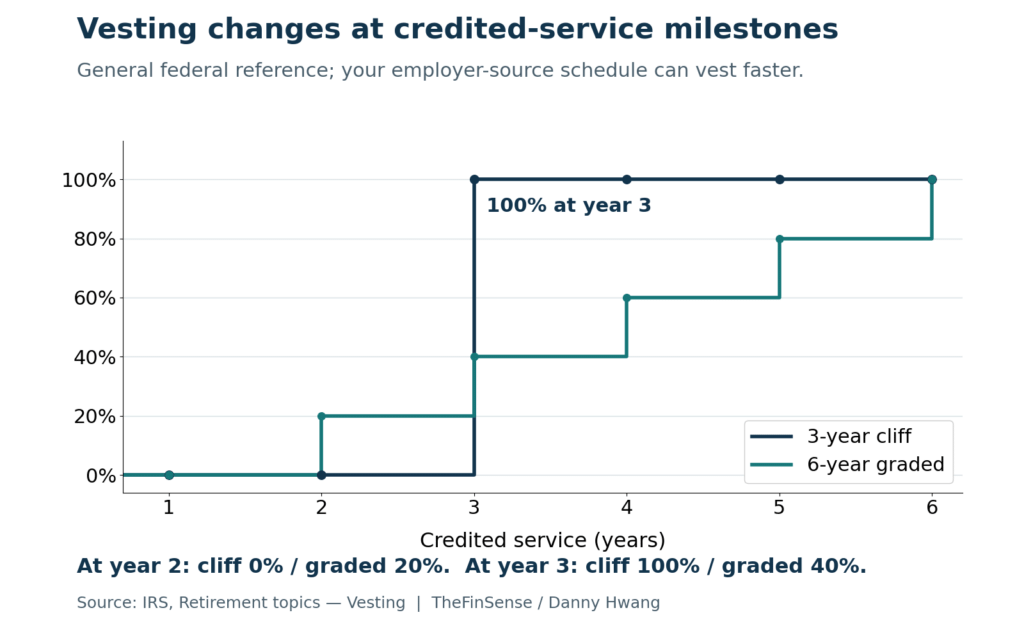
Sep 26, 2026
401(k) Vesting Schedule: What You Could Leave Behind When You Quit
A 401(k) vesting schedule determines how much employer money you keep if you leave a job. Compare cliff vs. graded vesting, confirm credited service, and calculate what could still be…
Read the analysis →
Sep 8, 2026
401(k) Rollover to IRA: Taxes, Fees, and When Not to Move the Money
Compare an old 401(k), a new employer plan, and an IRA before moving money. See the fee, tax, access, and rollover rules that can change the decision.
Read the analysis →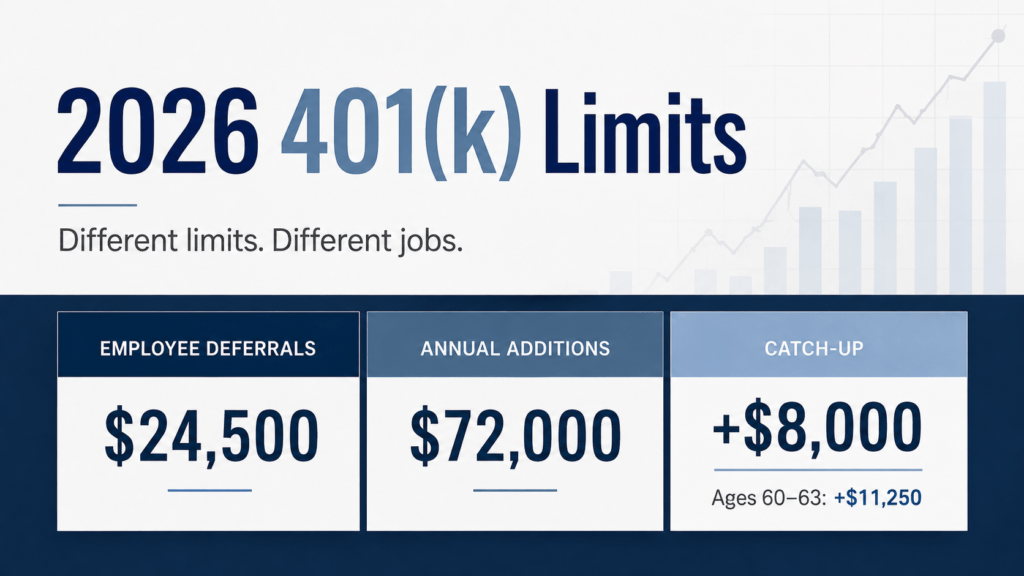
Aug 30, 2026
401k Contribution Limits: Employee, Employer, and Catch-Up Rules
Fill in your 2026 contribution amounts and work through employee deferral, annual-additions, catch-up, Roth catch-up, and employer-scope checks step by step.
Read the analysis →About this section and its research approach
Wealth FoundationsBuild the System Before You Pick the Assets
Long-term wealth is usually won or lost in the setup.
We break down investing basics, account rules, fees, taxes, allocation, and the behavioral decisions that compound for decades.
Primary Sources
Long-Term Math
Practical Decisions
The Foundation
How We Build Stronger Wealth Foundations
Good investing starts before a ticker enters the conversation. These guides focus on the account structure, costs, risk capacity, and repeatable rules that determine whether a sensible plan survives real life.
01 · Plan
What job does this money need to do?
We start with goals, time horizon, liquidity, and risk capacity so the portfolio is built around a real obligation rather than a generic return target.
02 · Friction
What quietly reduces the return?
We trace fees, taxes, account restrictions, trading costs, and default settings that look small in one year but become large over a full investing lifetime.
03 · Behavior
Can the plan survive a bad market?
We favor rules that remain usable during volatility, when a mathematically sound portfolio is most likely to be abandoned or changed at the wrong time.
Educational guides for building an investing system, not personalized investment, tax, or legal advice.